Written by Bronagh Reade, Founder of Airlinguee. Drawing on years of experience supporting students, educational institutions and professional host organisations across Ireland, Bronagh shares practical insights into becoming an equestrian working student and building a successful career in the equestrian industry.
What is an Equestrian Working Student or Equine Intern? A Complete Career Guide
An equestrian working student (or equine intern) is someone who gains practical equestrian experience by working alongside experienced professionals within a riding school, competition yard, breeding farm or another professional equestrian workplace while continuing to develop technical and transferable skills.
For anyone considering a career in the equestrian industry, becoming an equestrian working student is one of the most valuable ways to gain practical experience while learning from experienced professionals.
Unlike traditional classroom education, a working student in the equestrian industry develops professional skills by becoming part of the daily operation of a riding school, competition yard, breeding farm or other professional equestrian workplace. Every day offers the opportunity to improve horse handling, stable management, teamwork and communication while gaining a realistic understanding of how the professional horse industry operates.
Working student placements are often referred to as equine internships or horse care internships.
Many successful equestrian professionals begin their careers in exactly this way. Practical equestrian experience not only builds technical ability but also develops the reliability, organisation and confidence that equestrian employers consistently look for when recruiting new talent.
At Airlinguee, we regularly speak with students who believe the role is simply about riding horses. In reality, host organisations repeatedly tell us that the greatest value of becoming an equestrian working student lies in learning how professional yards operate, understanding horse welfare and developing the habits required for long-term success in the equestrian profession.
Whether your ambition is to work in show jumping, breeding, racing, dressage, eventing or another area of the horse industry, becoming an equestrian working student provides a strong foundation for future professional development.
In this guide, you’ll discover what an equestrian working student does, the skills required to succeed and why practical equestrian experience is often considered one of the best starting points for building a successful equestrian career.
What Is an Equestrian Working Student?
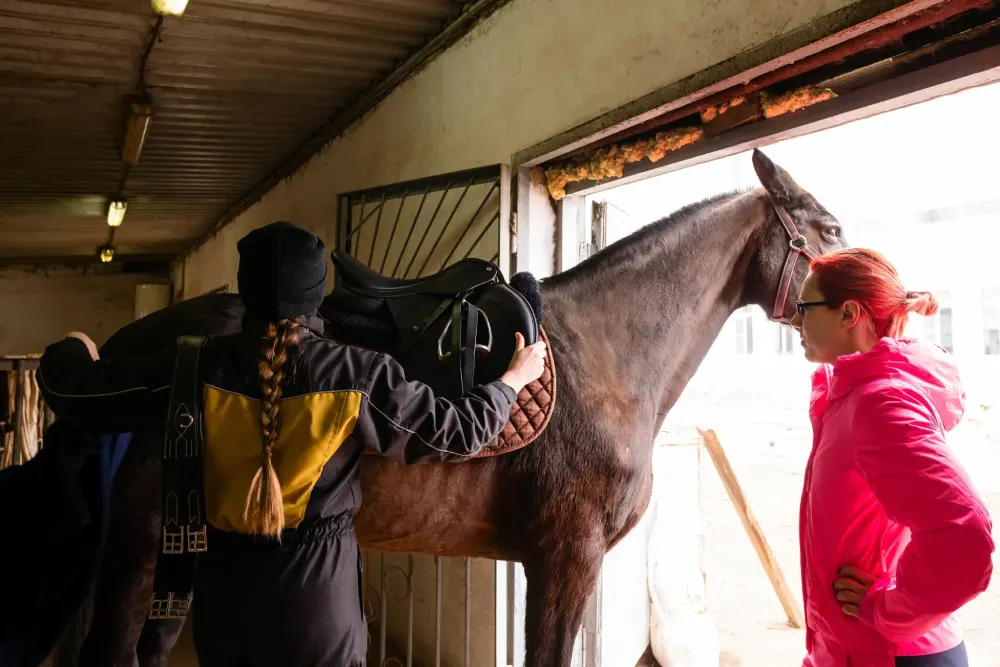
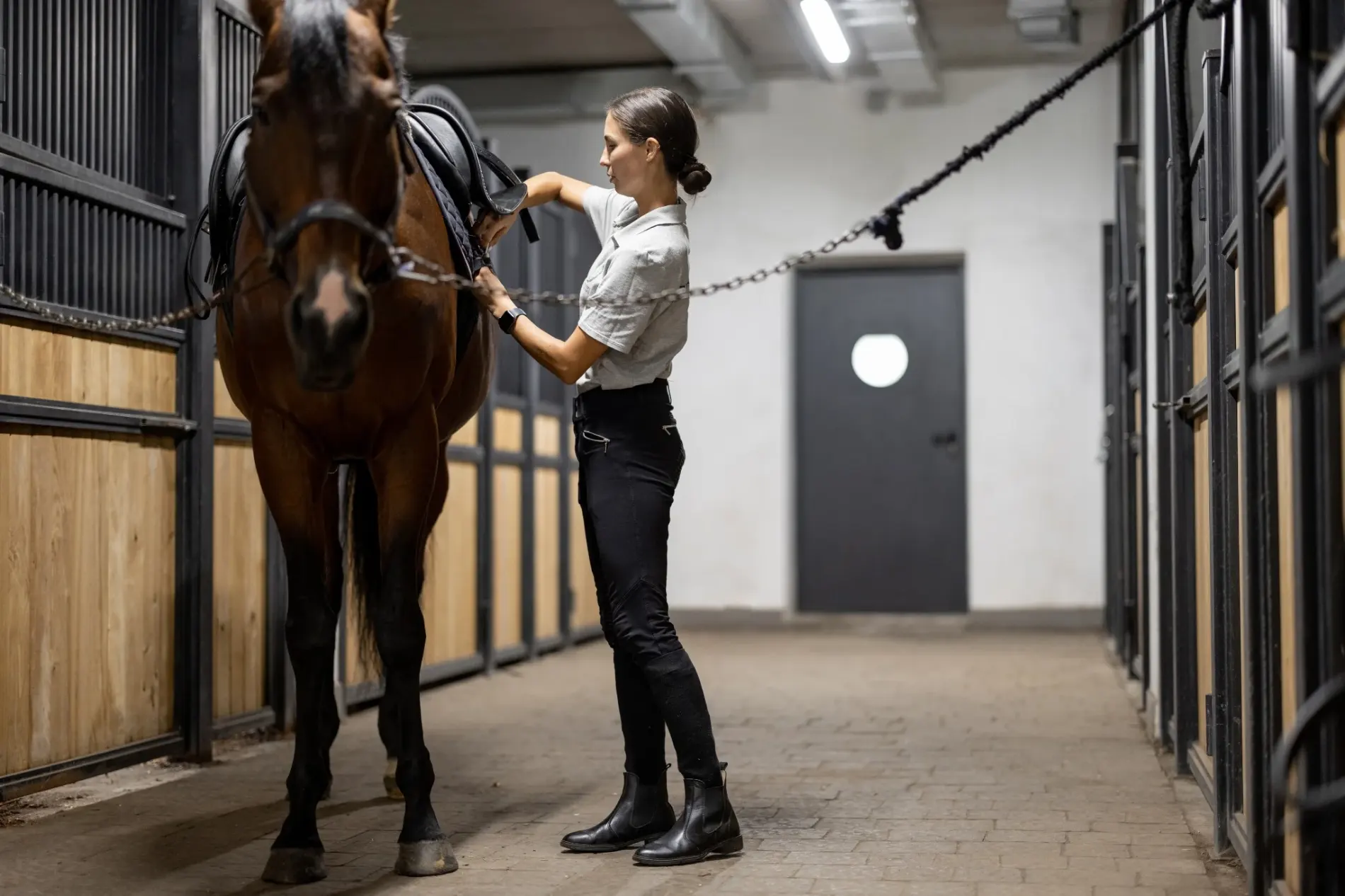
Practical daily responsibilities often include feeding, mucking out, grooming, tacking up, lunging, yard maintenance, and preparing horses for riding, training, or competition. While the specific responsibilities vary, working student placements are often referred to as equine internships or horse care internships, with every placement designed to expose students to the daily routines that keep professional equestrian businesses running efficiently.
A working student in the equestrian industry may gain experience in environments such as:
Professional riding schools
Competition yards
Breeding farms
Training stables
Equestrian centres
Horse rehabilitation facilities
While the specific responsibilities vary, every equine internship or working student placement is designed to expose students to the daily routines that keep professional equestrian businesses running efficiently.
This combination of structured learning and practical work allows students to understand not only how to care for horses but also how successful equestrian workplaces function as professional organisations.
From Bronagh’s Experience
“One of the biggest misconceptions we hear from students is that becoming an equestrian working student is mainly about riding. In reality, host organisations want reliable team players who are eager to learn, contribute, and build habits for long-term career success.”
What Host Organisations Expect from Working Students
Host organisations look for candidates who are reliable, motivated, and genuinely enthusiastic about learning every aspect of professional yard management. While riding ability is often valued, host yards prioritise soft skills—such as a strong work ethic, punctuality, clear communication, and an adaptable attitude—above raw riding talent alone.
Employers want working students who take pride in daily horse welfare, follow safety protocols, and work seamlessly within a team. To understand how host yards select candidates, you can learn more about Airlinguee’s placement process before submitting your application.
Why Do So Many Professionals Begin as Equestrian Working Students?
Across the professional horse industry, practical experience is often valued just as highly as formal qualifications.
Employers understand that many of the most important skills cannot be learned solely through books or classroom teaching. Confidence around horses, communication within a professional team, time management and the ability to adapt to changing situations all develop through daily experience in a real equestrian workplace.
This is why many experienced professionals recommend starting as an equestrian working student before specialising in a particular discipline or pursuing more advanced career opportunities.
The role allows students to experience different areas of the equestrian profession while gradually identifying the career path that best matches their interests and strengths.
For some, that journey leads towards competition sport. Others discover a passion for breeding, horse welfare, rehabilitation, coaching or stable management. The experience gained as a working student often provides the practical foundation that supports every future step within the equestrian industry.
What Does an Equestrian Working Student Actually Do?
Although responsibilities differ between organisations, every equestrian working student contributes to the daily operation of a professional equestrian workplace while continuing to learn from experienced staff.
A typical day combines horse care, stable management and teamwork with continuous workplace learning. Rather than performing repetitive tasks without context, students gradually understand why professional routines exist and how every responsibility contributes to horse welfare and the efficient running of the yard.
Daily responsibilities may include:
Equine Care & Handling
Caring for horses, monitoring their overall health, and checking for signs of injury or distress.
Grooming and preparing horses for exercise and routine work.
Feeding & Nutrition
Managing daily feed schedules, supplements, and forage.
Monitoring turnout routines and clean water supply.
Health & Basic Veterinary Care
Administering basic treatments, first aid, or medications under supervision.
Assisting visiting professionals, including veterinarians, farriers, and physios.
Facility & Equipment Maintenance
Maintaining clean, organized, and safe stables, turnout fields, fencing, arenas, and yard equipment.
Preparing, cleaning, and caring for leather tack, riding gear, and yard equipment.
Operational Support & Administration
Supporting trainers, riders, yard managers, and senior staff.
Assisting with the daily routines and operations of a professional equestrian workplace.
Assisting with horse transport prep, loading, and event/competition logistics.
Keeping accurate records of feeding, shoeing, and health logs.
Soft Skills & Workplace Habits
Demonstrating strong work ethic, punctuality, and adherence to yard safety procedures.
Communicating effectively with team members, clients, and horse owners.
As experience grows, many students become more confident in recognising equine behaviour, anticipating daily routines and understanding the standards expected throughout the professional horse industry.
One aspect that students often find surprising is how much emphasis professional yards place on consistency. Feeding schedules, horse welfare, stable management and teamwork follow carefully organised routines because every horse depends on reliable daily care.
Learning these professional standards is one of the reasons why practical equestrian experience remains so highly valued by equestrian employers across different sectors of the industry.
How Is an Equestrian Working Student Different from a Groom or Stable Hand?
These roles often overlap, but they are not identical.
A groom or stable hand is usually employed primarily to carry out specific operational responsibilities within the yard. An equestrian working student, by contrast, combines practical responsibilities with continuous professional learning.
The objective is not simply to complete daily tasks but to develop the knowledge, judgement and transferable skills needed to progress within the equestrian profession.
For many aspiring professionals, becoming an equestrian working student represents the first structured step towards long-term horse industry careers, providing practical equestrian experience that supports future opportunities across breeding, competition, coaching, horse welfare and stable management.
What Skills Do Equestrian Employers Really Look For?
When students imagine becoming an equestrian working student, many assume that riding ability is the most important requirement. While riding skills can certainly be valuable in some environments, they are rarely the first quality that equestrian employers mention.
Across the professional horse industry, employers consistently look for people who are reliable, motivated and willing to learn. Technical skills can be developed over time, but attitude, professionalism and commitment are much harder to teach.
The most successful equestrian working students seeking horse internships understand that every task, no matter how routine it may seem, contributes to the welfare of the horses and the smooth operation of the equestrian workplace.
From Bronagh’s Experience
“Host organisations who offer horse internships rarely ask us to find the best riders. Instead, they ask for students who are dependable, curious and genuinely interested in learning. Those qualities usually have the greatest impact on a successful placement.”
Expectations vs. Reality: Riding vs. Practical Yard Experience
One of the biggest misconceptions and common questions we hear at Airlinguee is: “Will I spend most of my time riding?”
The honest answer is that every placement is different, but practical experience always takes priority over riding time.
Many students worry that they are not experienced enough riders to apply for a placement, while others arrive expecting every day to revolve around training sessions and time in the saddle. In reality, employers assess candidates as a whole. They recognize that riding skills improve over time, but qualities such as responsibility, acute observation, and active teamwork determine long-term success.
While some host organisations offer riding opportunities based on a student’s prior experience, others focus entirely on horse care, stable management, and operational routines. Caring for horses involves feeding, grooming, turnout, equipment maintenance, and monitoring behavior. Students who embrace these everyday responsibilities often progress faster and gain far more value from their internship than those focused solely on riding performance.
The Transferable Skills That Shape Long-Term Equestrian Careers
One of the greatest advantages of becoming an equestrian working student is that the experience extends well beyond horse care.
Working in a professional equestrian workplace naturally develops transferable skills that remain valuable throughout an entire career in the equestrian industry.
These include:
Time management
Organisation and planning
Communication within professional teams
Problem-solving
Adaptability
Responsibility
Attention to detail
Confidence when working around horses
Whether someone later becomes a groom, yard manager, riding instructor or chooses another path within the equestrian profession, these abilities continue to support their professional development.
Why Professional English Can Shape Your Future Career
English has become the common language of much of the international equestrian sector.
Whether working in Ireland or another English-speaking country, equestrian professionals communicate daily with riders, trainers, veterinarians, farriers, horse owners and colleagues from many different backgrounds.
For an equestrian working student, developing professional English means far more than improving conversation skills.
It allows students to:
Understand instructions clearly.
Communicate confidently with experienced professionals.
Learn technical equestrian vocabulary.
Build relationships within international teams.
Increase future career opportunities across the professional horse industry.
Many former participants also tell us that working in English helped them become more confident, independent and adaptable—qualities that continue to benefit them long after their placement has finished.
Why International Experience Makes a Difference
Employers increasingly value candidates who have experienced different ways of working and can adapt to new professional environments.
International placements expose students to different management styles, horse breeds, competition systems and professional standards while helping them build confidence in multicultural teams.
According to Airlinguee’s experience, many students return from their placements with a clearer understanding of which area of the equestrian profession they would like to pursue.
Some discover a passion for breeding, others for coaching, stable management or horse welfare. For many, the placement provides the clarity needed to make informed decisions about their future horse industry careers.
Rather than simply adding another experience to a CV, an international equine internship often becomes an important milestone in a student’s professional development.
Why Ireland Is One of the Best Places to Become an Equestrian Working Student
Ireland has built an international reputation for excellence within the professional horse industry. Supported by standards from governing bodies like Horse Sport Ireland, the country offers top-tier competition yards, world-class breeding programmes, and professional training centres—making it an exceptional environment for anyone looking to gain hands-on equestrian experience.
For aspiring equestrian working students, Ireland provides far more than the opportunity to improve riding or horse care skills. It offers the chance to experience how professional equestrian workplaces operate while learning from experienced riders, trainers, breeders and yard managers.
Another important advantage is the opportunity to improve professional English through everyday communication. Working alongside international teams helps students become more confident, independent and prepared for future equestrian careers in an increasingly global industry.
From Bronagh’s experience, students often return home with much more than technical knowledge. They gain confidence, independence and a clearer understanding of the professional path they want to follow within the equestrian profession.
Is an Equestrian Working Student Role Right for You?
Becoming an equestrian working student is not simply about spending time with horses. It requires commitment, curiosity and a genuine willingness to learn from experienced professionals.
This type of role may be an excellent starting point if you:
Want to build a long-term career in the equestrian industry.
Enjoy learning through practical experience.
Are interested in understanding how professional equestrian workplaces operate.
Value teamwork and responsibility.
Want to develop transferable professional skills.
Are considering future horse industry careers in areas such as breeding, coaching, horse welfare or stable management.
Every student’s journey is different, but one thing remains consistent: the knowledge and habits developed through practical equestrian experience continue to provide value long after the placement has finished.
Taking the Next Step Towards a Career in the Equestrian Industry
Understanding the role of an equestrian working student is the first step. The next is finding an environment where you can continue learning while gaining meaningful professional experience.
Choosing the right horse internship host organisation is often just as important as choosing the country itself. A supportive learning environment, experienced professionals and structured daily routines can have a lasting impact on both your confidence and your long-term professional development.
At Airlinguee, we work closely with educational institutions, students and professional host organisations to help participants find placements that match their experience, career goals and aspirations within the equestrian profession.
If you’re considering gaining professional equestrian experience abroad, our Equine Internships in Ireland programme explains how structured placements can help you develop practical skills, improve your professional English and build a strong foundation for your future career in the equestrian industry.
Frequently Asked Questions
What is an equestrian working student?
An equestrian working student is someone who gains practical equestrian experience by working alongside experienced professionals within a riding school, competition yard, breeding farm or another professional equestrian workplace while continuing to develop technical and transferable skills.
Is an equestrian working student the same as a groom?
Not exactly. Although both roles involve horse care and stable management, an equestrian working student combines practical responsibilities with continuous learning. The emphasis is on developing professional knowledge and preparing for long-term equestrian careers.
Do equestrian working students ride horses every day?
Not necessarily. Responsibilities depend on the host organisation, the student’s previous experience and the type of placement. Many programmes focus primarily on horse welfare, stable management and understanding how the professional horse industry operates.
Do I need previous experience with horses?
Most organisations expect applicants to have some practical experience around horses and to be confident with basic horse handling. However, employers generally place just as much importance on attitude, reliability and willingness to learn as they do on technical ability.
Why is practical equestrian experience so important?
Practical equestrian experience allows students to develop professional habits, improve communication, understand horse welfare and build the confidence required to progress within the equestrian profession. It also helps future employers evaluate how candidates perform in a real equestrian workplace.
Can international experience improve my equestrian career?
Yes. International placements expose students to different professional environments, improve language skills and provide valuable workplace experience that can strengthen future opportunities across the professional horse industry.
Building a successful career in the equestrian industry requires much more than technical knowledge. It requires practical experience, curiosity, professionalism and the willingness to keep learning throughout your career.
For many professionals, becoming an equestrian working student is where that journey begins. The lessons learned become the foundation for future equestrian careers across competition sport, breeding, coaching, horse welfare, or stable management.
Written by Bronagh Reade, Founder of Airlinguee. Drawing on years of experience supporting students, educational institutions and professional host organisations across Ireland, Bronagh shares practical
Horse riding XC is an exhilarating equestrian discipline that combines speed, skill, and technical riding across diverse terrain. XC stands for cross-country, a fundamental phase
The Ultimate Equestrian Adventure Cross country horseback riding holidays in Ireland are a paradise for equestrian enthusiasts, offering grazing fields, paddocks, and wooded trails perfect
If you’re seeking an unforgettable adventure, cross country horse riding holidays in Ireland offer the perfect blend of excitement and natural beauty. Imagine navigating cross
This article explores some of our top recommendations when choosing an Equine Studies course in Ireland. Firstly, thinking of a career in the equine industry
Classical Dressage: Classical dressage, also known as dressage, is an equestrian discipline that combines harmony, precision, and elegance in the communication between the rider and